
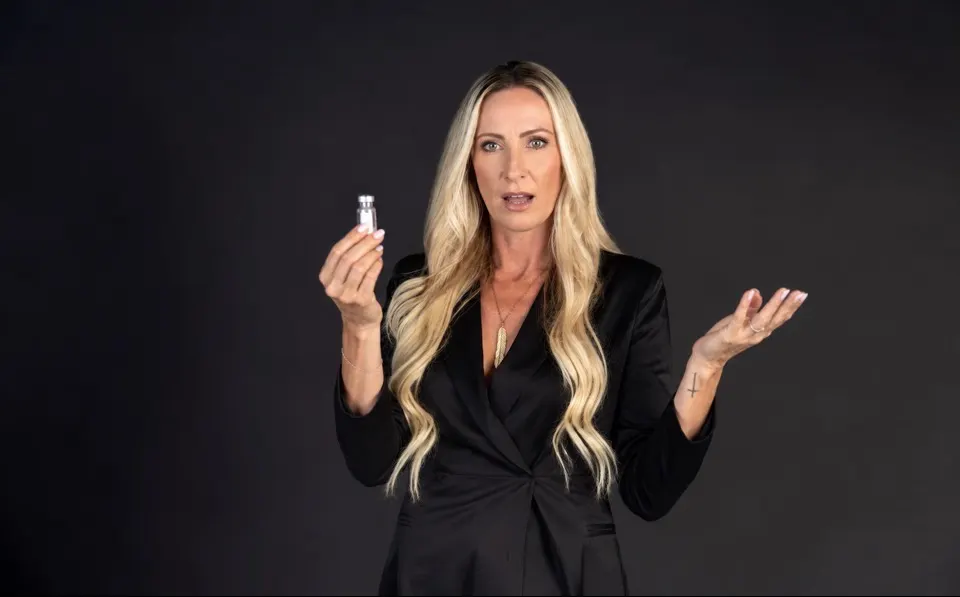
The rise of the 'just order it online' approach to injectables
The wellness industry has exploded. Semaglutide, BPC-157, testosterone, human growth hormone peptides, NAD+ — compounds that were once available only through licensed medical providers are now being sold through websites, Telegram groups, and offshore suppliers with the click of a button.
The pitch is always the same: same medication, fraction of the price, no doctor required. What that pitch leaves out is everything that matters.
What you don't know can hurt you
When you obtain an injectable compound outside of a licensed, clinically supervised setting, you typically don't know:
01
What's actually in it
02
Where it was made
03
How pure it is
04
Whether it's been stored correctly
05
What dose you're actually getting
Why 'my friend does it and is fine' isn't the answer
Adverse events from contaminated or mislabeled injectables don't always announce themselves immediately. Some reactions are acute and obvious. Others unfold slowly — an infection that develops over days, an immune response that builds over time, a metabolic disruption that shows up in labs months later.
The absence of an immediate problem is not evidence of safety. It's evidence that the problem hasn't surfaced yet.
Beyond contamination, there's the issue of clinical appropriateness. The right hormone therapy or peptide protocol is not one-size-fits-all. Testosterone administered to someone without confirming baseline levels and ruling out contraindications can cause real harm. Semaglutide started at the wrong dose without metabolic monitoring can produce severe adverse effects. These are clinical decisions — not consumer purchases.
The medication is only one part of the equation. The testing, the clinical assessment, the dosing, the monitoring, and the follow-up are what make a treatment safe and effective. Buying a compound online gives you the first piece and none of the rest.
What clinical oversight actually means
At Idaho Health & Hormones, every injectable treatment we provide follows a clear standard:
Test
We test before we treat
Source
We use verified, pharmaceutical-grade sources
Dose
We dose based on your biology
Monitor
We monitor
Accountable
We're accountable
The questions worth asking any provider
If you're considering hormone therapy, peptide therapy, or any injectable treatment — whether at a clinic in the Treasure Valley or anywhere else — ask these questions:
- Where is this compound sourced from?
- Is this pharmacy FDA-registered and CGMP-compliant?
- Can I see the certificate of analysis (COA) for this batch?
- What testing was done before you prescribed this for me?
- How will you monitor my response?
A provider who can't answer these questions clearly and confidently is a provider worth reconsidering.
You wouldn't take an unlabeled pill from a stranger. The standard for what you inject should be at least as high.
Safe, supervised care in Boise and Meridian, Idaho
If you're interested in hormone therapy, peptide therapy, or any of the advanced treatments we offer — and you want to know exactly what you're getting, where it comes from, and why it's right for you — we'd like to talk.
We serve patients across the Treasure Valley, including Boise, Meridian, Eagle, Nampa, and Caldwell. Same-week appointments available. No referral needed.
Book a consultation or call us at (208) 268-8851.
Common questions
Is it safe to buy peptides or hormones online?
Buying injectable compounds online carries significant risks. Independent testing has found products with incorrect dosages, no active ingredient, undisclosed additives, or contaminants. Without a verified supply chain, certificate of analysis, and clinical oversight, you cannot confirm what you are actually injecting.
What's the difference between pharmaceutical-grade and gray-market compounds?
Pharmaceutical-grade compounds come from FDA-registered facilities operating under Current Good Manufacturing Practice (CGMP) standards, with documented purity, sterility, and chain-of-custody. Gray-market compounds often bypass these safeguards, which is why they can be sold at lower prices.
Why do I need labs before starting hormone or peptide therapy?
Labs establish your baseline, confirm whether therapy is appropriate, identify contraindications, and guide dosing. Starting testosterone, semaglutide, or peptides without baseline data and ongoing monitoring can lead to ineffective treatment or real harm.
What should I ask a provider before starting injectable therapy?
Ask where the compound is sourced, whether the pharmacy is FDA-registered and CGMP-compliant, whether you can see the certificate of analysis, what baseline testing was performed, and how your response will be monitored over time.
What are the risks of unverified injectables?
Risks include infection, immune reactions, dosing errors, degraded or inactive product, exposure to heavy metals or bacteria, and untreated underlying conditions that should have been identified before prescribing.
Selected references
- Cohen PA, et al. Presence of banned drugs in dietary supplements following FDA recalls. JAMA. 2014;312(16):1691-1693.
- U.S. Food & Drug Administration. Compounding and the FDA: questions and answers. FDA.gov. Updated 2024.
- U.S. Food & Drug Administration. FDA alerts patients and health care providers about risks associated with compounded GLP-1 drugs. FDA.gov. 2024.